
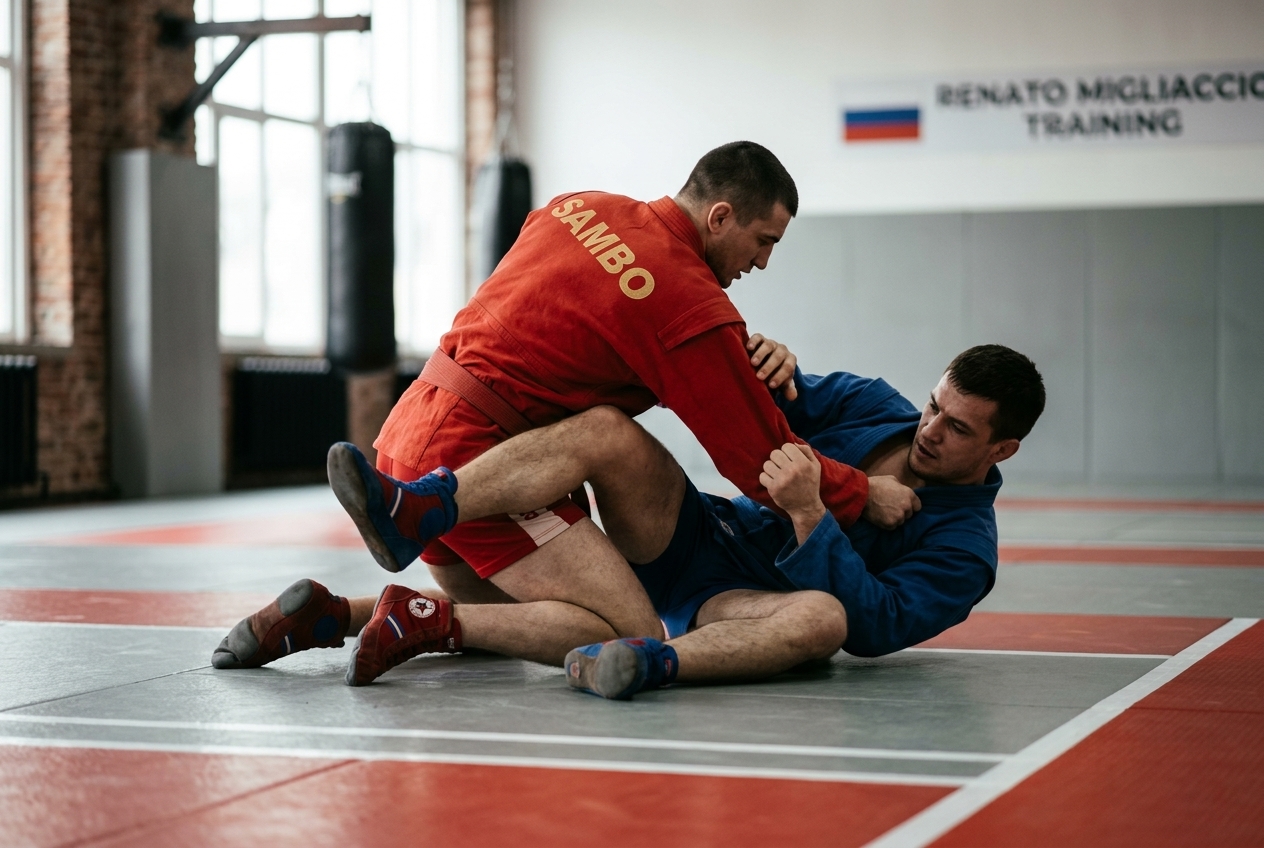
What is Sambo?
What is Sambo?
If you have ever watched high-level mixed martial arts (MMA), you have likely seen fighters dominating the cage with relentless takedowns, devastating leg locks, and unmatched physical endurance. More often than not, those fighters have a background in Sambo.
Created in the Soviet Union during the 1920s, Sambo was specifically designed for the Red Army to combine the most effective techniques from various traditional martial arts into one unified, highly combat-efficient system.
The word “Sambo” is actually an acronym for SAMozashchita Bez Oruzhiya, which translates directly to “Self-Defense Without Weapons.”
The Two Main Styles of Sambo
While Sambo draws heavy inspiration from Judo, Greco-Roman wrestling, and regional folk wrestling styles, it evolved into two distinct modern disciplines:
Sport Sambo (Sports Sambo):
Similar to competitive Judo and Catch Wrestling, Sport Sambo focuses on explosive takedowns, throws, joint locks, and ground control. Unlike Olympic Judo, chokeholds are generally prohibited, but leg locks—such as kneebars and ankle locks—are fully integrated and highly refined.
Combat Sambo:
Developed for military and special forces training, Combat Sambo allows striking (punches, kicks, knees, elbows), headbutts, groin strikes, and chokes alongside grappling. It is widely considered one of the closest modern combat sports to real-world hand-to-hand combat and a seamless transition to MMA.
Why Sambo Practitioners Excel in Modern Combat Sports
What sets Sambo apart is its relentless pressure and hybrid fluid adaptability. Practitioners don’t just rely on static positions; they attack dynamically from every angle—transitioning seamlessly from stand-up throws directly into submission holds on the mat.
Whether you are looking to build real-world self-defense skills, improve your grappling transitions for BJJ, or develop elite athletic conditioning, understanding Sambo offers a vital perspective on complete martial arts mastery.